Asset custodians: who actually holds a fund's securities
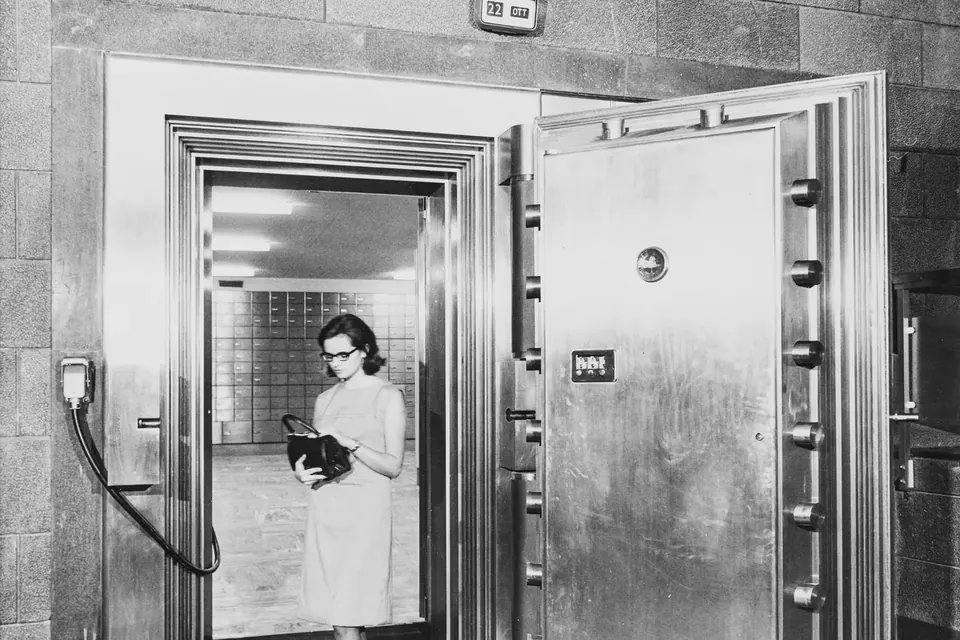
When a fund owns shares or bonds, they are almost never certificates in a safe. They are entries in a chain of electronic accounts, ending at a central securities depository. Custodians are the institutions that hold those entries on behalf of investors, settle trades and keep the records straight. Their work is invisible when it goes well and critical when anything goes wrong.
What a custodian does
- Safekeeping: holding securities and cash in accounts in the client's name or for the client's benefit, separated from the custodian's own assets.
- Settlement: delivering securities and receiving cash, or the reverse, when trades settle, in line with the instructions of the fund manager.
- Asset servicing: collecting dividends and interest, processing corporate actions such as splits, mergers and rights issues, and reclaiming withholding tax where treaties allow.
- Reporting: providing statements of holdings and transactions, which the fund's administrator and auditor rely on.
- Additional services: many custodians also offer foreign exchange, securities lending as agent for the owner, fund accounting and administration.
The custody chain
Securities ultimately sit at central securities depositories (CSDs), such as the Depository Trust Company in the United States, part of DTCC, or Euroclear and Clearstream in Europe, along with national depositories. Only participants, typically banks and brokers, hold accounts at a CSD. A global custodian that holds securities in many countries usually relies on a network of sub-custodians, local banks that are participants in each market's CSD. An investor's ownership therefore runs through several layers of accounts. Each layer must keep accurate records and keep client assets separate from its own.
Segregation and insolvency
The central purpose of custody is to protect assets if an intermediary fails. Securities held in custody for clients are generally not part of the custodian's estate in insolvency, provided they are properly segregated and recorded. Cash is different: cash deposited with a bank is usually a claim on the bank, not segregated property, which is why funds monitor counterparty exposure on cash balances.
For broker-dealers in the United States, SEC Rule 15c3-3 requires customers' fully paid securities to be kept in the broker's possession or control and customer cash to be protected in reserve accounts. If a member broker-dealer fails, the Securities Investor Protection Corporation (SIPC) protects customers' securities and cash up to 500,000 dollars, including up to 250,000 dollars in cash, for missing assets; it does not protect against market losses.
Custody and the SEC custody rule
An investment adviser registered with the SEC that has custody of client assets must, under Rule 206(4)-2, keep them with a "qualified custodian", such as a bank, a registered broker-dealer or certain foreign financial institutions, and meet additional safeguards. For hedge funds, the annual audit by a PCAOB-registered accountant, delivered to investors on time, is the usual way of satisfying the rule's verification requirements.
Depositaries in Europe
The EU's AIFMD requires each alternative investment fund to appoint a single depositary, typically a credit institution or investment firm, with three main duties: safekeeping of assets, monitoring the fund's cash flows, and oversight of certain activities of the manager, such as valuation and subscriptions. The depositary is liable for the loss of financial instruments held in custody, subject to limited exceptions. UCITS funds have similar depositary requirements. This is stronger than the U.S. approach and reflects lessons from the Madoff fraud, which affected some European funds whose custodians had delegated safekeeping.
Custodians versus prime brokers
A prime broker also holds a fund's assets, but with a key difference. Assets at a prime broker that support borrowing may be pledged and rehypothecated, so the fund may have only a contractual claim to their return. Assets at a custodian are held in safekeeping and not reused without consent. After the 2008 failure of Lehman Brothers, many funds started keeping excess assets, those not needed as collateral, at independent custodian banks, and moving them to the prime broker only when needed. Some prime brokers offer custody through a separate, segregated entity for this reason.
The largest custodians
Global custody is concentrated among a small number of very large banks, including BNY, State Street, JPMorgan Chase and Citi in the United States and BNP Paribas in Europe, each holding tens of trillions of dollars of assets under custody and administration according to their annual reports. Their scale gives them efficiency and global reach, and makes them systemically important; several are designated global systemically important banks by the Financial Stability Board.
Questions investors ask
- Who is the custodian, and is it independent of the manager?
- Are assets held in segregated accounts in the fund's name?
- What share of assets is held with prime brokers versus custodians?
- Does the auditor confirm holdings directly with the custodian?
- Where are cash balances held, and what counterparty exposure do they create?
Settlement cycles and operational risk
Custodians work to the settlement cycle of each market. In May 2024, the United States, Canada and Mexico moved most securities transactions from settlement two business days after the trade (T+2) to one business day (T+1). The European Union and the United Kingdom have announced plans to follow in October 2027. Shorter cycles reduce counterparty risk and margin requirements but leave less time to match trades, arrange foreign exchange and fix errors, which places greater demands on custodians' and managers' operations. Failed settlements, where securities or cash are not delivered on time, carry costs and, in the EU, cash penalties under the Central Securities Depositories Regulation. For a fund, the quality of a custodian's processing, its cut-off times and its handling of exceptions can matter as much as its balance sheet.
Sources
- U.S. Securities and Exchange Commission, Rule 206(4)-2, Custody of funds or securities of clients by investment advisers.
- U.S. Securities and Exchange Commission, Rule 15c3-3, Customer protection.
- Securities Investor Protection Corporation, What SIPC protects.
- Directive 2011/61/EU (AIFMD), article 21 on depositaries.
- Bank for International Settlements and IOSCO (2012). Principles for Financial Market Infrastructures.
- Financial Stability Board, List of global systemically important banks.
 Inside a hedge fund
Prime brokers
Financing, securities lending, custody and reporting, and the lessons of Lehman and Archegos.
 Inside a hedge fund
Capital introductions
How prime brokers introduce funds to investors, the marketing rules that apply, and realistic expectations.
 Risk & portfolios
An introduction to value at risk
Historical, parametric and Monte Carlo VaR, how to backtest it, and why regulators moved to expected shortfall.